Apna Franchise Logo
Signup/Login
Apna Franchise Logo

Food Franchise

Food is one of the most repeat-tested franchise categories out there, largely because taste is hard to fake and customers notice immediately if a dish doesn't match what they expected from the brand name on the signboard. A food franchise lets you operate a restaurant, quick-service outlet, or delivery-focused kitchen under a name with a proven menu, tested recipes, and a customer base that already knows what to expect before they order, instead of building a food business's reputation one dish at a time on your own. This category covers food franchise opportunities across quick-service restaurants (QSR), full-service dine-in formats, and delivery-only cloud kitchen models, with details on kitchen setup investment, raw material sourcing, and the recipe training and supply chain support franchisors provide to keep every order tasting the same.
Top Food Franchise

Chicago Pizza Franchise

Frequently Asked Questions

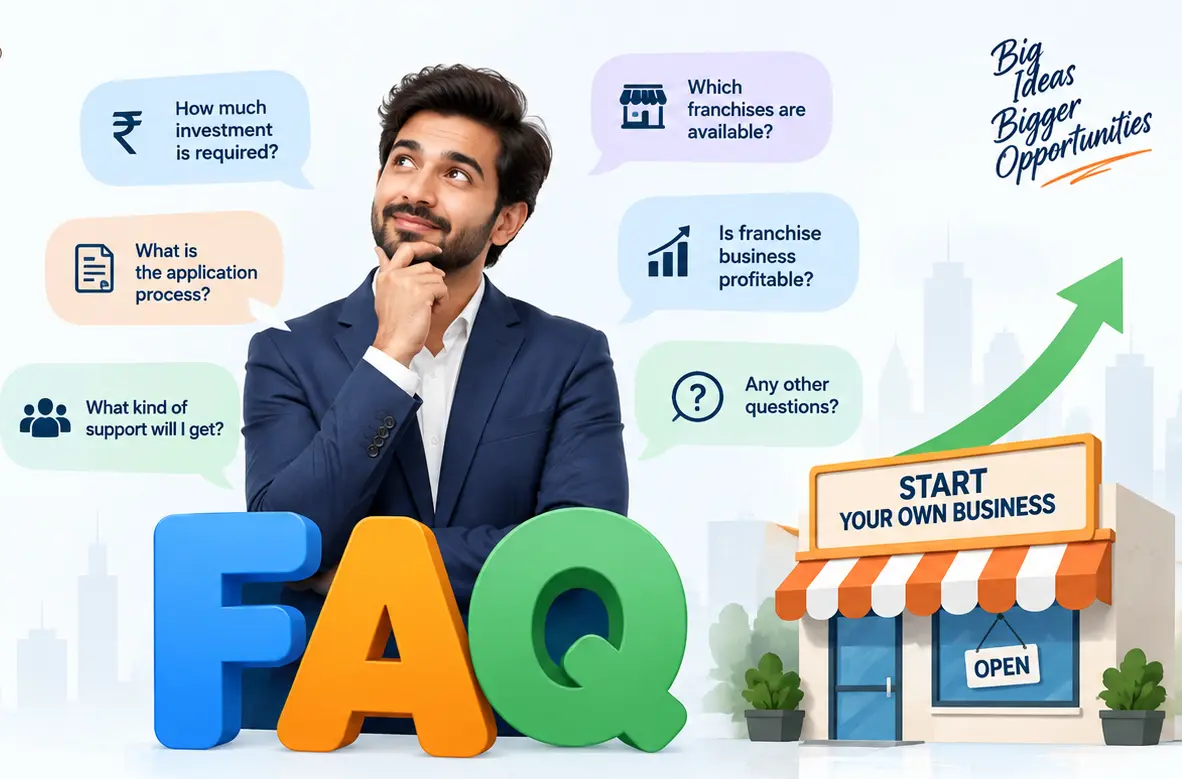
Food Franchise FAQ Image
It spans quick-service restaurants built for fast turnaround, full-service dine-in restaurants with table service and a fuller menu, and delivery-only cloud kitchen models that skip dine-in space entirely — kitchen size, seating, and investment vary hugely across these three.
Not necessarily — most franchisors provide detailed training on recipes, cooking processes, and kitchen operations, so your main job is managing staff, quality control, and daily operations rather than cooking yourself, though hands-on food experience does help with day-to-day troubleshooting.
Franchisors typically specify approved suppliers or provide key ingredients, sauces, and pre-mixes directly to maintain consistent taste across every outlet — this is usually non-negotiable for signature menu items, even if some fresh produce is sourced locally.
Generally yes — since there's no seating area, interior design, or front-of-house staff to manage, cloud kitchen formats usually require a smaller space and lower fit-out investment, though kitchen equipment and delivery logistics costs still apply.
Expect standardized recipes, portion guidelines, cooking process manuals, and regular quality audits or mystery inspections, since inconsistent food quality at even one outlet can affect how customers view the entire brand.
This varies by format — cloud kitchens often reach break-even faster given lower setup costs, typically within 1 to 2 years, while full dine-in restaurants usually take longer, often 2 to 4 years, given the higher investment in space, interiors, and staffing.